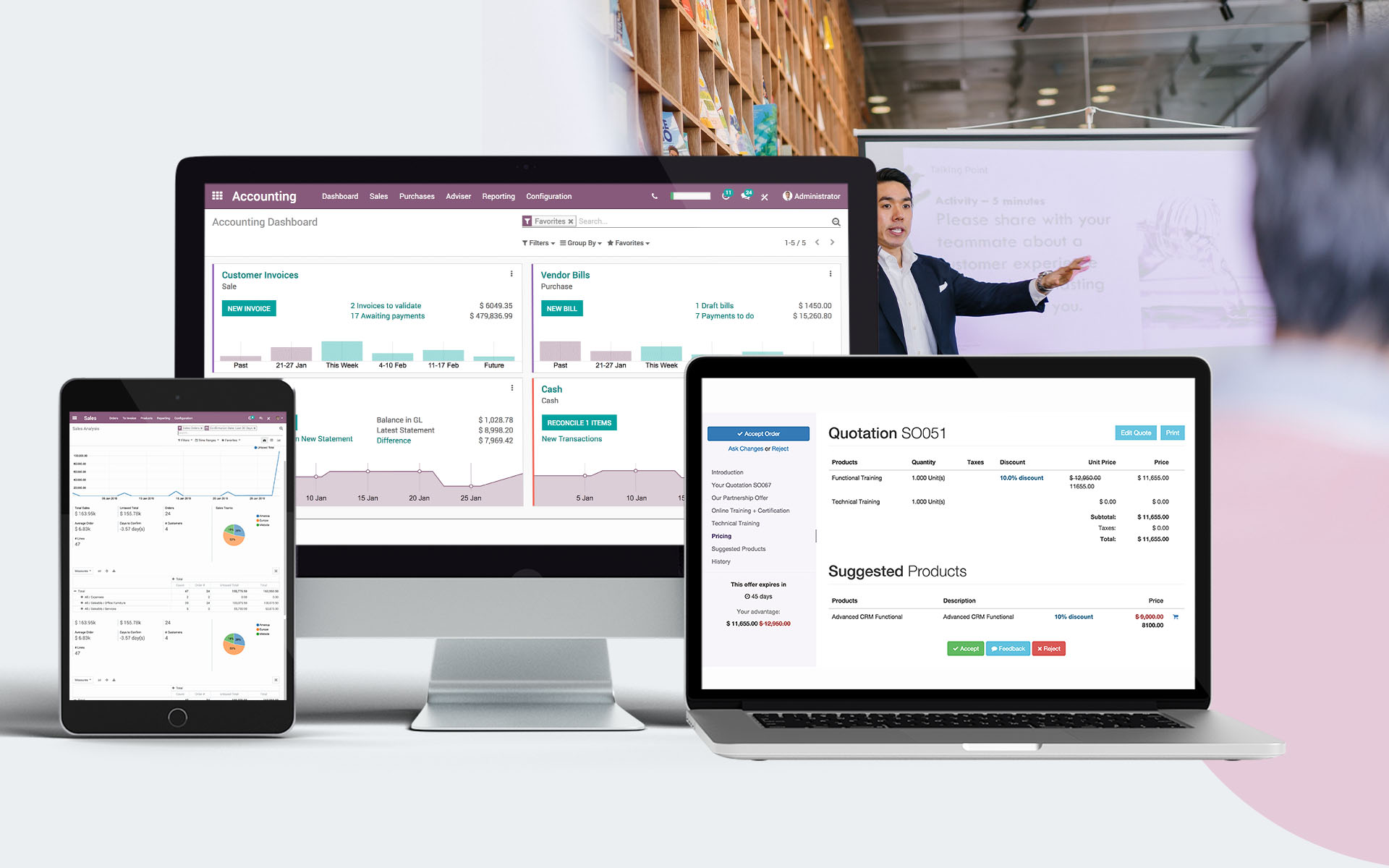
In today’s fast-paced digital age, businesses need solutions that streamline operations, improve productivity, and keep them competitive. One such revolutionary tool is ERP Online, a modern take on the traditional ERP systems that is transforming the way companies manage their operations. In this article, we’ll dive deep into ERP Online, its benefits, features, and why it’s essential for businesses of all sizes.
What is ERP?
The Core Definition of ERP
Enterprise Resource Planning (ERP) is an integrated suite of applications that help organizations manage core business processes, such as finance, HR, procurement, and manufacturing, in one system. It centralizes data, enabling smoother workflows and reducing the inefficiencies of scattered data.
Importance of ERP in Modern Business
ERP is a critical tool for businesses because it helps unify operations. It eliminates silos, ensures data accuracy, and improves overall decision-making by giving companies a 360-degree view of their operations. With the increasing complexity of business environments, having a robust ERP system is more important than ever.
What is ERP Online?
Evolution of Traditional ERP to Cloud-Based ERP
ERP Online is a cloud-based ERP system that has evolved from traditional, on-premise ERP solutions. Unlike its predecessors, ERP Online is hosted on remote servers, allowing users to access it over the internet. This eliminates the need for heavy IT infrastructure and gives businesses more flexibility in managing their operations.
Key Features of ERP Online
ERP Online offers a variety of features such as real-time data access, automation of routine tasks, centralized databases, and integration with third-party applications. It provides an all-in-one solution that is scalable and easy to customize according to business needs.
Benefits of ERP Online
Accessibility and Flexibility
One of the standout features of ERP Online is its accessibility. Businesses can access their ERP system from anywhere in the world, on any device.
Remote Access Anytime, Anywhere
Whether you’re working from the office, at home, or traveling, ERP Online ensures you can keep your finger on the pulse of your business. This is especially crucial in today’s hybrid work environment.
Multi-Device Compatibility
With ERP Online, you can access data on a laptop, tablet, or smartphone. This ensures that team members can stay productive no matter which device they prefer.
Cost Efficiency
Lower Initial Investment
ERP Online reduces the need for upfront investments in IT infrastructure, making it a more affordable option for businesses of all sizes. There’s no need to purchase expensive hardware or maintain on-site servers.
Reduced Maintenance Costs
Since ERP Online is cloud-based, the service provider handles maintenance, updates, and security, cutting down on internal IT costs.
Scalability and Customization
Adapting to Business Growth
As your business grows, so does your ERP system. ERP Online can easily scale up or down based on your requirements, ensuring that your system grows with your business.
Personalized ERP Solutions
ERP Online is highly customizable. Businesses can tailor the system to meet their specific needs, ensuring that the solution is the perfect fit for their industry and goals.
Real-Time Data Access
Better Decision-Making with Live Data
With real-time data at your fingertips, decision-making becomes more informed and immediate. ERP Online allows businesses to track metrics and performance in real-time.
Streamlining Operations
Real-time data helps streamline operations by allowing quick identification of bottlenecks and inefficiencies, leading to smoother processes.
ERP Online vs. Traditional ERP
Cloud ERP vs. On-Premise ERP
Key Differences
While traditional ERP is hosted on local servers, ERP Online resides in the cloud. This means less dependency on internal IT resources and more flexibility in how the system is accessed and managed.
Advantages of Cloud ERP
The cloud-based nature of ERP Online provides advantages such as automatic updates, increased accessibility, and the ability to scale without significant costs.
Why Businesses are Moving to ERP Online
Key Drivers of Change
Cost savings, enhanced flexibility, and the ability to support remote work are some of the main drivers pushing businesses to adopt ERP Online.
Industry Examples
Industries such as retail, manufacturing, and healthcare are increasingly switching to cloud-based ERP systems due to the need for real-time data and increased collaboration.
Key Features of ERP Online
Centralized Database
ERP Online centralizes all business data, providing a single source of truth for decision-makers.
Data Unification Across Departments
It eliminates the need for multiple systems by unifying data across various departments such as finance, HR, and procurement.
Automation and Workflow Efficiency
Reducing Manual Workloads
By automating repetitive tasks, ERP Online reduces the workload on employees, allowing them to focus on more strategic activities.
Improving Team Collaboration
ERP Online enhances collaboration across teams by providing real-time updates and unified communication channels.
Integration Capabilities
Third-Party Software Integration
ERP Online can integrate seamlessly with third-party applications such as CRM systems, enhancing its functionality.
Seamless Communication Across Platforms
It allows seamless communication across different platforms and tools, making it easier for businesses to operate efficiently.
How to Choose the Right ERP Online System
Assessing Business Needs
Industry-Specific Requirements
When selecting an ERP Online system, it’s essential to choose one tailored to your industry’s specific needs.
Growth Projections and Scalability
Consider how scalable the system is to meet future growth needs.
Evaluating ERP Providers
Cost vs. Value
It’s crucial to balance cost and value when choosing an ERP provider, ensuring you get the most out of your investment.
Customer Support and Training
Ensure the provider offers solid customer support and thorough training for your team.
Implementation and Training
Smooth Transitioning Process
A smooth implementation process is key to minimizing downtime and ensuring a quick return on investment.
Employee Training Programs
Provide your team with comprehensive training to ensure they are fully equipped to use the system effectively.
Common Challenges and Solutions in ERP Online
Data Security and Privacy Concerns
Security Protocols
Ensure your ERP system follows the latest security protocols to protect sensitive data.
Data Compliance
Choose an ERP provider that complies with relevant data protection regulations.
Resistance to Change in Organizations
Employee Adaptability
Organizations often face resistance to change. Offer training and support to ease the transition.
Change Management Techniques
Effective change management techniques can help businesses successfully adopt ERP Online.
Customization Challenges
Balancing Customization with Usability
Excessive customization can complicate the system. It’s important to balance customization with ease of use.
Overcoming Integration Issues
Work closely with your ERP provider to ensure smooth integration with existing systems.
Future of ERP Online
AI and Machine Learning in ERP
Predictive Analytics and Automation
AI and machine learning will play a significant role in future ERP systems, enhancing predictive analytics and automation.
IoT Integration with ERP Online
Real-Time Data from Connected Devices
IoT integration will allow businesses to gather real-time data from connected devices, improving decision-making and operational efficiency.
Conclusion
ERP Online is the future of business management systems. Its flexibility, scalability, and cost-effectiveness make it a superior choice for modern businesses. As more companies adopt cloud-based solutions, the benefits of ERP Online will only continue to grow, making it an essential tool for success.
FAQs
What industries benefit the most from ERP Online?
Industries like manufacturing, retail, and healthcare benefit significantly from ERP Online due to its ability to streamline operations and provide real-time data.
How secure is ERP Online compared to on-premise solutions?
ERP Online is generally more secure because cloud providers employ the latest security protocols, ensuring data protection and compliance.
Can small businesses use ERP Online effectively?
Yes, ERP Online is scalable and customizable, making it ideal for small businesses that need flexibility without the high upfront costs.
What are the typical costs of ERP Online?
Costs can vary depending on the provider and the level of customization, but overall, ERP Online tends to be more affordable due to lower maintenance costs.
How does ERP Online improve business efficiency?
By automating routine tasks, centralizing data, and providing real-time access, ERP Online helps businesses operate more efficiently and make better decisions.
Leave a Reply