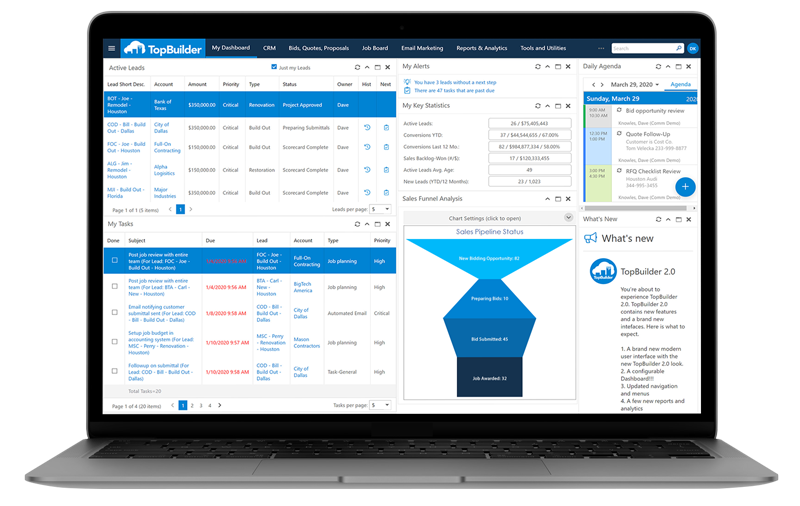
In today’s fast-paced world, contractors face various challenges in managing their clients, projects, and teams. Fortunately, CRM (Customer Relationship Management) software is here to help contractors navigate these challenges with ease. In this article, we’ll dive into why CRM software is essential for contractors, its key benefits, and how to choose the best CRM solution for your business.
What is CRM Software?
Understanding CRM Basics
CRM software is a tool that helps businesses manage their interactions with current and potential customers. It stores client information, tracks communications, and helps businesses stay organized. For contractors, it goes beyond just managing clients; it plays a vital role in streamlining workflows and ensuring projects run smoothly.
How CRM Software is Tailored for Contractors
Contractors have unique needs compared to other businesses. CRM software for contractors is often tailored to handle project management, lead tracking, client communication, and document storage—everything a contractor needs to manage both their clients and projects efficiently.
Why Contractors Need CRM Software
The Rise of Technology in the Construction Industry
Technology is transforming the construction industry, and CRM software is at the forefront of this change. Contractors need to adapt to these technologies to remain competitive and improve operational efficiency. CRM software helps contractors stay on top of their game by providing tools to manage every aspect of their business.
Managing Client Relationships Efficiently
At its core, CRM is about managing client relationships. For contractors, building strong, lasting relationships with clients is crucial for repeat business and referrals. CRM software provides a centralized platform where contractors can store client data, track interactions, and ensure no detail is overlooked.
Benefits of CRM Software for Contractors
Improved Project Management
CRM software allows contractors to streamline project management. By centralizing all project-related information, contractors can easily assign tasks, track progress, and ensure everyone is on the same page.
Streamlining Communication
Effective communication is key in any project. With CRM software, contractors can facilitate smooth communication between team members, clients, and subcontractors, ensuring everyone is well-informed.
Better Task Assignment and Progress Tracking
CRM software allows contractors to assign tasks and track their progress in real-time. This ensures that nothing slips through the cracks and projects are completed on time and within budget.
Enhanced Customer Satisfaction
Happy customers are the backbone of any successful business. CRM software helps contractors keep track of client preferences and manage their expectations.
Tracking Customer Preferences
By keeping track of customer preferences, contractors can provide personalized services that meet the exact needs of their clients.
Managing Client Expectations
CRM software helps contractors manage client expectations by providing clear communication and updates throughout the project lifecycle, reducing the chances of misunderstandings or delays.
Efficient Lead Management
Generating leads is only half the battle. Contractors also need to nurture and convert these leads into paying customers.
Nurturing Potential Clients
With CRM software, contractors can easily track and nurture leads. Automated follow-ups and personalized communications can significantly improve the chances of converting leads into clients.
Converting Leads into Customers
CRM software helps contractors move leads through the sales funnel, from initial contact to signed contract, by providing the right tools and insights at each stage of the process.
Increased Productivity
Contractors often juggle multiple tasks simultaneously. CRM software automates many routine tasks, freeing up valuable time for contractors to focus on more important aspects of their business.
Automating Routine Tasks
Routine tasks like sending follow-up emails or generating invoices can be automated with CRM software, reducing the risk of errors and ensuring that no task is forgotten.
Reducing Manual Errors
Automation reduces the chances of human error, ensuring that important tasks are completed accurately and on time.
Key Features of CRM Software for Contractors
Contact Management
CRM software allows contractors to store and manage all client information in one place, making it easy to keep track of interactions and project details.
Storing Client Information
Contractors can store important client information such as contact details, project history, and personal preferences, ensuring they are well-prepared for every interaction.
Interaction History
CRM software keeps a record of all client interactions, making it easy to track progress and maintain a high level of professionalism.
Project Tracking and Management
CRM software simplifies project tracking by providing tools for timeline management, task assignments, and real-time updates.
Timeline Management
Contractors can manage project timelines with ease, ensuring that deadlines are met and clients are kept informed of any delays.
Task Assignment
With CRM software, contractors can assign tasks to team members and track their progress, ensuring that every aspect of the project is on track.
Quotation and Proposal Generation
CRM software helps contractors generate accurate quotes and proposals, saving time and ensuring consistency.
Generating Accurate Quotes
CRM software allows contractors to create accurate, detailed quotes quickly, reducing the chances of underpricing or overcharging.
Managing Contracts and Proposals
With built-in tools for managing contracts and proposals, contractors can streamline the process of securing new business.
Mobile Accessibility
In today’s fast-paced world, mobile accessibility is crucial. CRM software provides contractors with the tools they need to monitor projects and communicate with clients on the go.
On-the-Go Project Monitoring
With mobile CRM, contractors can monitor project progress, assign tasks, and update clients no matter where they are.
Instant Client Updates
Mobile CRM allows contractors to send instant updates to clients, keeping them informed of any changes or progress in real-time.
Choosing the Right CRM Software for Contractors
Factors to Consider
When choosing a CRM software, contractors should consider factors such as budget, customization needs, and integration with existing tools.
Budget
Contractors should choose CRM software that fits their budget without compromising on essential features.
Customization Needs
Every contractor’s business is unique. CRM software that offers customization options allows contractors to tailor the system to their specific needs.
Popular CRM Software Options for Contractors
Buildertrend
Buildertrend is a popular CRM software specifically designed for contractors, offering features such as project management, client communication, and mobile accessibility.
JobNimbus
JobNimbus is another popular choice for contractors, providing tools for lead management, project tracking, and customer communication.
CoConstruct
CoConstruct is a powerful CRM software designed for custom builders and remodelers, offering features such as budgeting, scheduling, and client communication.
Implementation Tips for Contractors
Training Your Team
To ensure successful implementation, contractors should invest in training their team on how to use the CRM software effectively.
Ensuring Ease of Use
Choosing a user-friendly CRM system and providing comprehensive training ensures that the team can adopt the software quickly.
Ongoing Support
Ongoing support is crucial for troubleshooting issues and ensuring that the software continues to meet the contractor’s needs.
Integrating CRM with Other Tools
CRM software can be integrated with other tools, such as accounting software and project management tools, to further streamline operations.
Accounting Software
Integrating CRM software with accounting tools allows contractors to manage their finances more efficiently.
Project Management Tools
By integrating CRM with project management tools, contractors can ensure that all aspects of their business are aligned and working together seamlessly.
Conclusion
In today’s competitive construction industry, CRM software is an essential tool for contractors. It streamlines project management, improves client communication, and enhances overall productivity. By choosing the right CRM solution and implementing it effectively, contractors can stay ahead of the competition and grow their business.
FAQs
What is the best CRM software for small contractors?
Small contractors can benefit from CRM software like Buildertrend or JobNimbus, which offer affordable solutions with robust features.
Can CRM software help with lead generation?
Yes, CRM software helps contractors track and nurture leads, improving their chances of converting them into paying clients.
How difficult is it to implement CRM software for contractors?
Implementation can be smooth with proper training and ongoing support from the software provider.
Is CRM software expensive?
CRM software comes in various price ranges, so contractors can find a solution that fits their budget.
How does mobile CRM benefit contractors?
Mobile CRM allows contractors to manage projects and communicate with clients on the go, improving efficiency and responsiveness.
Leave a Reply